
Highlights:
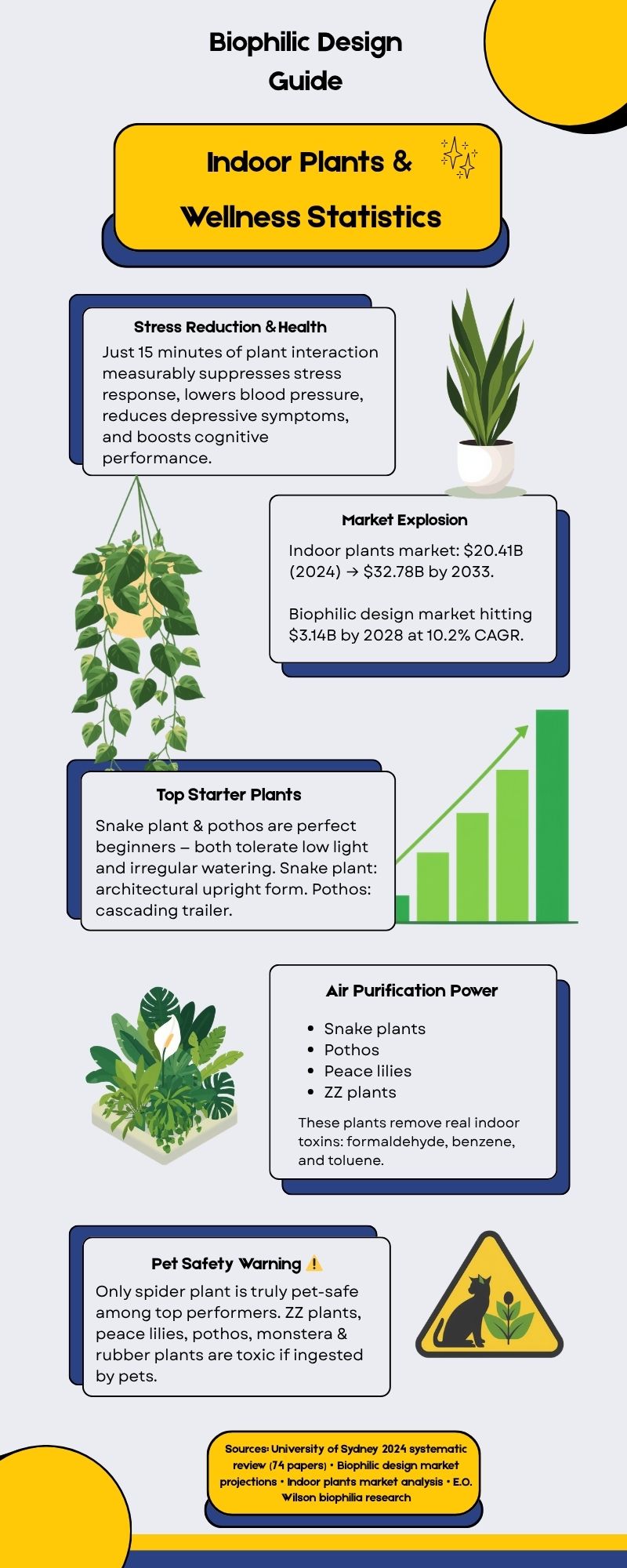
- The science is real. Biophilic design isn’t just aesthetic — indoor plants measurably suppress the stress response, lower blood pressure, reduce depressive symptoms, and improve cognitive performance, with as little as 15 minutes of plant interaction making a measurable difference.
- Easy plants are actually better biophilic plants. A thriving, low-maintenance plant delivers more psychological benefit than a struggling, high-maintenance one. Choosing species suited to your real conditions beats chasing aspirational ones.
- Air purification is a genuine bonus. Plants like snake plants, pothos, peace lilies, and ZZ plants remove real indoor toxins — formaldehyde, benzene, toluene — making them functional investments, not just décor.
- The snake plant and pothos are the best starting points. Both tolerate low light and irregular watering, and together they cover the two key biophilic design forms: architectural uprights and cascading trailers.
- Placement and density matter as much as species choice. A single plant won’t create the restorative effect biophilic design promises — layering plants at multiple heights across the spaces where you actually spend time is what moves the needle.
- Pet owners have fewer safe options than they think. Of the top performers, only the spider plant is truly pet-safe. ZZ plants, peace lilies, pothos, monstera, and rubber plants are all toxic if ingested.
- This is a growing market for a reason. With the indoor plants market projected to nearly double to $32.78 billion by 2033, consumer behavior is catching up with what the research has long shown — plants meaningfully improve how indoor spaces feel to live in.
You’ve probably noticed that a room with plants just feels different. There’s something about a trailing pothos on a shelf or a sculptural snake plant in the corner that makes a space feel alive, grounded, and calming in a way that no throw pillow or gallery wall can quite replicate. That instinct isn’t just aesthetic preference — it’s biology. And a growing body of research is proving it.
Biophilic design — the practice of intentionally incorporating natural elements into built environments — is no longer a niche concept whispered between interior designers. It’s a full-blown global movement. The biophilic design market is projected to reach $3.14 billion by 2028, growing at a CAGR of 10.2%, and the indoor plants market itself was valued at $20.41 billion in 2024, on track to hit $32.78 billion by 2033. Consumers are putting their money where their instincts are.
But here’s the challenge most people face: life is busy. The dream of a lush, plant-filled home often collides with reality — forgetful watering schedules, unpredictable lighting, and a history of killed fiddle-leaf figs. The good news? Not all plants require your constant attention. Some of the best performers for biophilic interiors are also the most forgiving. This guide covers the top low-maintenance plants for biophilic design, with the data to explain why they work — not just aesthetically, but physiologically and psychologically.
Why Biophilic Design Actually Works: What the Science Says
Before we get into specific plants, it’s worth understanding why this whole thing matters. Biophilic design draws on the concept of “biophilia” — the innate human affinity for living systems and nature, a term popularized by biologist E.O. Wilson. The core idea is that humans evolved surrounded by nature, and our nervous systems are still wired to respond positively to it, even when we encounter it indoors.
The evidence is compelling. A systematic review published in 2024 by researchers at the University of Sydney analyzed 74 peer-reviewed papers on biophilic design in workplaces and found that indoor plants were effective at reducing stress levels and improving cognitive performance, mood, health, and general well-being. A 2024 study published in the Journal of Environmental Psychology found that integrating nature into the workplace correlates with 15% higher productivity and 20% less stress among staff.
At the physiological level, the mechanism is measurable. A randomized crossover study published in PMC found that interacting with indoor plants suppressed sympathetic nervous system activity (your fight-or-flight response) and lowered diastolic blood pressure, compared with performing a computer task. Participants also reported feeling more comfortable, soothed, and connected to something natural.
Perhaps most striking for those who spend most of their time at home: a scoping review in ScienceDirect examined six epidemiological studies on indoor plants and mental health. Despite variation in study design and populations, every single study found a positive correlation between having indoor plants and mental health outcomes — reduced stress, fewer depressive symptoms, and less negative emotion.
Only 15 minutes of interaction with houseplants has been shown to reduce stress levels, and houseplants have been shown to improve productivity by up to 15%. The WELL Building Institute found that 84% of respondents believe biophilic design can boost employee well-being, and hospitals with biophilic features have seen patient recovery times reduced by 8%.
The takeaway: bringing plants into your home isn’t just decorating. It’s an evidence-backed investment in your mental and physical wellbeing.
The Low-Maintenance Advantage: Why Easy Plants Are Better Biophilic Plants
There’s a paradox at the heart of plant parenting: a stressed, drooping, half-dead plant is not going to give you the calming, restorative benefits of biophilic design. It’s going to give you guilt and anxiety. The most effective biophilic plant is one that’s actually thriving — and for most people with normal schedules and imperfect light conditions, that means choosing resilient, low-maintenance species.
Additionally, a study on green plants and mental stress during COVID-19 found that the growth status of indoor plants affected their psychological benefit to occupants. Healthy, visibly growing plants had a stronger positive effect. This gives you a practical design principle: choose plants suited to your actual conditions, not your aspirational ones.
The following plants tick every box — they’re visually compelling enough to anchor a biophilic design scheme, scientifically documented for their air-purifying and psychological benefits, and genuinely tolerant of the real-world conditions most homes offer.
1. Snake Plant (Dracaena trifasciata) — The Overachiever of Neglect
If you could design the perfect beginner biophilic plant from scratch, you’d probably end up with a snake plant. Its bold, upright, architectural form makes it a natural focal point in any room — exactly the kind of “direct experience of nature” biophilic design calls for. And it requires almost nothing from you in return.
Snake plants are desert natives, which means they’ve evolved to survive drought, low light, and temperature fluctuation. They store water in their thick, fibrous leaves and can go weeks — sometimes over a month — between waterings. The most common mistake owners make is watering too frequently. In low-light rooms, water once every three to six weeks in winter.
On the functional side, snake plants are among the top air purifiers for indoor spaces, effectively removing formaldehyde and benzene from indoor air. They’re one of the few plants that perform CAM photosynthesis, meaning they release oxygen at night rather than during the day — making them a particularly good choice for bedrooms.
Placement tips: Snake plants thrive in everything from low-light corners to bright indirect light. Use taller varieties (Dracaena trifasciata ‘Laurentii’) as sculptural floor plants, or smaller rosette varieties (‘Hahnii’) grouped on shelves.
Care snapshot: Water when soil is completely dry. Tolerates low light. Avoid overwatering. Virtually unkillable.
2. Pothos (Epipremnum aureum) — The Cascading Green Workhorse
Pothos is often called “devil’s ivy” because it remains stubbornly green even in low-light conditions where most plants would struggle. It’s one of the most recommended starter plants for a reason: it’s nearly impossible to kill and extraordinarily versatile in how it can be styled.
From a biophilic design perspective, pothos earns its place through its ability to create the “cascading, organic quality” that biophilic interiors prize. A shelf lined with trailing golden pothos or a hanging basket in a high corner adds layered greenery and visual movement — both hallmarks of how nature appears in the wild. Its heart-shaped leaves in shades of gold, white, and green add variety and life without requiring multiple species.
The NASA Clean Air Study rated golden pothos as one of the best household plants for purifying air, with proven efficacy in reducing formaldehyde, benzene, and toluene. Laboratory research at the University of Georgia and studies by Wolverton and colleagues documented pothos’s ability to reduce benzene and trichloroethylene to barely detectable levels within two hours under experimental conditions.
It grows rapidly, is easy to propagate from cuttings, and tolerates irregular watering. The variegated varieties (golden pothos, marble queen) prefer slightly more light to maintain their patterns, but even in low light, they’ll continue growing.
Placement tips: Let it trail from shelves, bookshelves, or hanging baskets. Works beautifully in bathrooms with indirect light. Can be trained up a moss pole for a more vertical, jungle effect.
Care snapshot: Water when the top inch of soil is dry. Tolerates low to medium indirect light. Fast-growing and easy to propagate.
3. ZZ Plant (Zamioculcas zamiifolia) — The Drought-Proof Statement Piece
If the pothos is the friendly workhorse, the ZZ plant is the quiet sophisticate. Its deep, glossy, dark-green leaflets are arranged in elegant arching stems that look almost too perfect to be real. It brings a lush, architectural quality to a room and works exceptionally well in modern and minimalist interiors where other plants might look too fussy.
The ZZ plant originates from drought-prone regions of eastern Africa, which tells you everything you need to know about its care requirements. It stores water in thick rhizomes underground and can survive weeks — or even a month or more — without watering. It tolerates low-light conditions that would be fatal to most other houseplants.
The ZZ plant is documented as absorbing toxins including xylene, toluene, and benzene from indoor air. Its waxy leaves also reflect light, which can brighten a dark room visually — a small but meaningful contribution to the overall biophilic atmosphere.
One important note: the ZZ plant is toxic if ingested, so it should be placed out of reach in homes with pets or small children. All other aspects of its care are extremely forgiving.
Placement tips: Ideal for darker corners, offices, or rooms with north-facing windows. Its upright, sculptural form pairs well with clean-lined furniture and natural materials.
Care snapshot: Water every 2–4 weeks, less in winter. Tolerates very low light. Let soil dry completely between waterings.
4. Spider Plant (Chlorophytum comosum) — The Pet-Safe Prolific Purifier
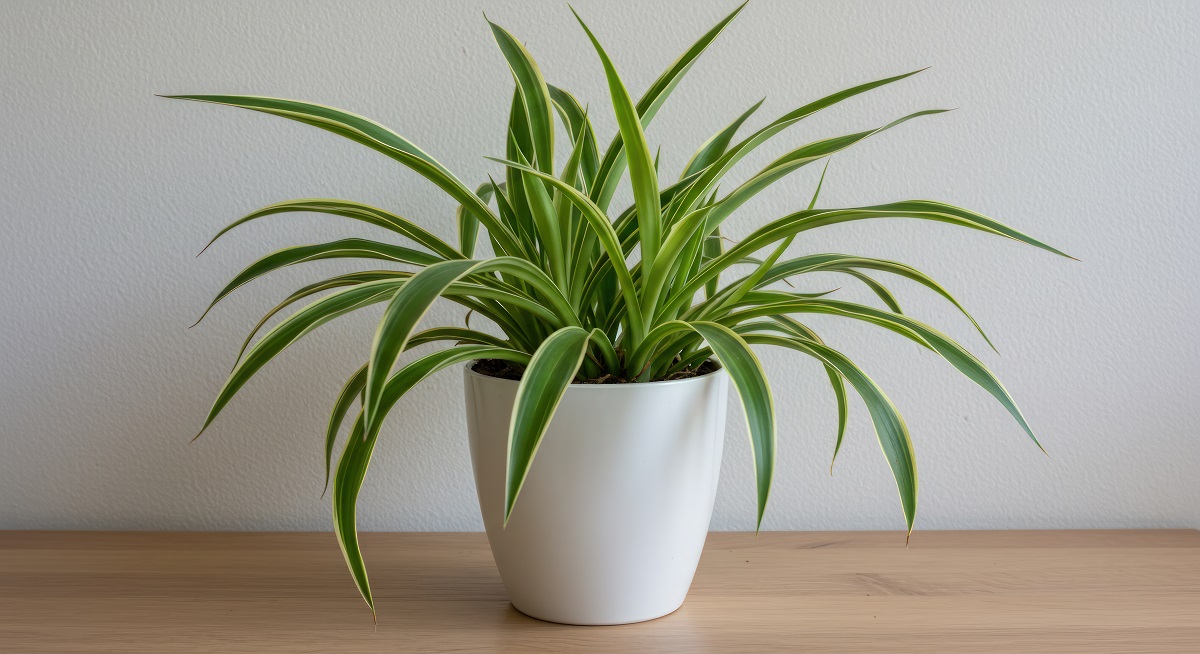
The spider plant is one of the most charming and versatile plants you can bring into a biophilic home. Its long, arching leaves — typically green with cream or white stripes — and the “spiderettes” (baby plants) that dangle from long stems create a playful, organic composition that feels genuinely alive. It’s also one of the few truly pet-safe air-purifying plants, making it ideal for households with cats or dogs.
Ever since the landmark Clean Air Study, NASA has officially recognized spider plants for their ability to filter and purify indoor air, with documented effectiveness at removing formaldehyde and other pollutants. They’re also natural adapters — comfortable in a wide range of light conditions and temperature ranges, and tolerant of occasional missed waterings.
Biophilically speaking, the spider plant’s propagation habit is a bonus: the dangling spiderettes can be snipped off and potted to create new plants, adding a sense of natural growth and abundance to your space over time. Grouping mother and offspring plants together can create a rich, layered composition.
Placement tips: Perfect in hanging baskets, on shelves, or near windows. Thrives in indirect light but tolerates lower light. Great in bathrooms, kitchens, and children’s rooms.
Care snapshot: Water moderately, allowing soil to partially dry between waterings. Pet-safe. Easy to propagate. Prefers indirect light but is adaptable.
5. Peace Lily (Spathiphyllum wallisii) — The Low-Light Luxury Option
The peace lily is the rare plant that combines elegant white blooms with exceptional air-purifying ability and a genuine preference for lower light conditions. It’s a natural fit for spaces where most flowering plants struggle — north-facing rooms, hallways, and shaded corners.
The NASA Clean Air Study found the peace lily to be one of the most effective indoor plants for removing toxins, including carbon monoxide, alcohols, trichloroethylene, acetone, formaldehyde, benzene, and ammonia. It’s also a natural humidifier — its transpiration process releases moisture into the air, which can improve comfort in dry indoor environments.
From a design standpoint, the peace lily’s glossy dark green leaves and bright white spathes (the flower-like bracts) add sophisticated contrast to a space. It’s one of the few low-light plants that flowers regularly indoors, which supports the biophilic principle of creating spaces that feel seasonally alive and dynamic.
One consideration: peace lilies droop noticeably when thirsty, then perk back up quickly after watering. This visible communication actually makes care straightforward — the plant tells you when it needs water rather than silently suffering. Like ZZ plants, peace lilies are toxic if ingested, so placement matters in pet- or child-occupied homes.
Placement tips: Excellent in low-light interiors, offices, bedrooms, and hallways. Pair with woven baskets or terracotta pots for a warm, organic aesthetic.
Care snapshot: Water when leaves begin to droop slightly. Prefers low to medium indirect light. Toxic to pets — keep elevated or out of reach.
6. Rubber Plant (Ficus elastica) — The Bold, Sculptural Statement
For those who want maximum visual impact with minimal effort, the rubber plant delivers. Its large, waxy leaves in deep burgundy, dark green, or variegated patterns create an immediate focal point, and unlike the dramatic fiddle-leaf fig (which is notoriously fussy), the rubber plant is comparatively forgiving once established.
Rubber plants prefer bright indirect light and moderate watering, but they tolerate some neglect and are far more stable in indoor conditions than many statement plants. They grow into impressive indoor trees over time, adding the kind of vertical green architecture that defines a sophisticated biophilic space.
Rubber plants are known for their ability to remove formaldehyde and other pollutants from indoor air, making them functional as well as beautiful. They’re also a long-term investment — a well-cared-for rubber plant can grow for decades and become a genuine centrepiece of a room.
Placement tips: Thrives near east or west-facing windows with bright indirect light. Use as a floor plant in living rooms, home offices, or entryways. Avoid moving it frequently — rubber plants dislike being relocated once settled.
Care snapshot: Water when the top inch of soil is dry. Prefers bright indirect light. Wipe leaves with a damp cloth occasionally to keep them glossy and maximize photosynthesis.
7. Monstera Deliciosa — The Icon of Biophilic Interiors
No list of biophilic interior plants would be complete without the monstera. Its large, fenestrated (hole-punched) leaves are perhaps the defining visual signature of the biophilic design aesthetic, and for good reason — they add a tropical, lush quality that immediately transforms the energy of a room.
The monstera has earned its popularity not just for its looks but for its resilience. It adapts to a range of light conditions (though it grows fastest in bright indirect light), tolerates infrequent watering, and is one of the faster-growing statement plants available. Watching a monstera put out a new leaf is genuinely satisfying, and the visual presence of actively growing plants has been shown to have a stronger positive psychological effect than static ones.
Monstera leaves have been shown to absorb pollutants including formaldehyde and benzene, contributing to improved indoor air quality alongside their visual benefits. They also transpire water, contributing to indoor humidity levels.
Placement tips: Place in a bright room away from direct sunlight. Use a moss pole to encourage upright, climbing growth — this mimics its natural growth pattern and produces larger, more dramatic leaves. Allow space; mature monsteras spread wide.
Care snapshot: Water when the top 1–2 inches of soil are dry. Prefers bright indirect light but tolerates medium light. Wipe leaves occasionally. Toxic to pets if ingested.
How to Arrange Plants for Maximum Biophilic Effect
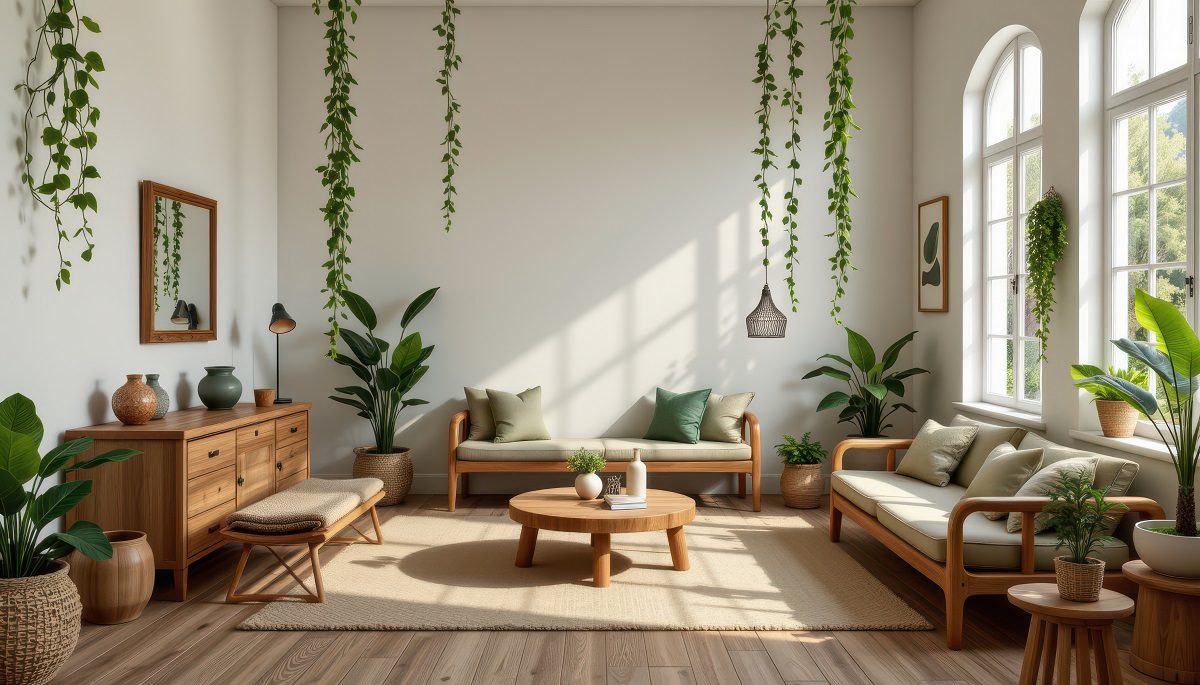
Choosing the right plants is only half the equation. How and where you place them matters enormously in biophilic design. A few principles grounded in the research:
Density matters more than you might think.
The classroom study cited earlier found meaningful benefits when 50 plants were introduced into a learning environment, increasing further with 100 plants. You don’t need to go to those extremes at home, but a single plant on a windowsill won’t create the enveloping, restorative effect that biophilic design is known for. Aim for clusters and layers — mix floor plants, shelf plants, and hanging plants in the same space.
Layer heights and textures.
In nature, vegetation exists at multiple levels — ground cover, shrubs, mid-canopy, canopy. Replicating this layering indoors creates a more immersive and psychologically satisfying effect. Pair a tall rubber plant with a trailing pothos at mid-level and a small ZZ plant at floor level.
Place plants where you spend time.
The restorative benefits of indoor plants depend on exposure. Your home office, bedroom, and main living space are higher-priority locations than a rarely-used guest room.
Match plants to your actual light conditions.
A struggling plant undermines the whole exercise. Before buying, assess your light honestly — most urban apartments have far less natural light than we’d like to admit. If in doubt, choose a ZZ plant, snake plant, or pothos, which are genuinely shade-tolerant.
Use natural materials for pots.
Terracotta, rattan, ceramic, and wood complement biophilic plant displays far better than plastic pots. This extends the biophilic principle beyond the plants themselves into the materials of the space.
The Data Summary: Why Low-Maintenance Plants Are the Smart Biophilic Choice
Here’s a quick overview of the six key low-maintenance plants covered in this guide, along with their primary functional benefits:
| Plant | Light Tolerance | Watering Frequency | Key Air Toxins Removed | Pet-Safe? |
| Snake Plant | Low–bright indirect | Every 3–6 weeks | Formaldehyde, benzene | No |
| Pothos | Low–medium indirect | When top inch is dry | Formaldehyde, benzene, toluene | No |
| ZZ Plant | Very low–medium | Every 2–4 weeks | Xylene, toluene, benzene | No |
| Spider Plant | Low–medium indirect | Moderate, partial dry | Formaldehyde | Yes |
| Peace Lily | Low–medium indirect | When drooping slightly | Formaldehyde, benzene, ammonia, CO | No |
| Rubber Plant | Bright indirect | Top inch dry | Formaldehyde | No |
Getting Started: A Practical First Step
If you’re new to biophilic design or have a history of plant fatalities, here’s the simplest possible starting point: buy one snake plant and one pothos. Put the snake plant somewhere you spend time (bedroom, office, living room). Let the pothos trail from a shelf. Wait. Don’t overwater. In six to eight weeks, you’ll have living proof that this works — not just visually, but in how that room feels to be in.
From there, you can layer in more species, experiment with groupings, and let your biophilic instincts guide you. The data gives us the why. The plants themselves will give you the how.
The global surge in indoor plant adoption reflects something deeper than a trend. It reflects a quiet, collective recognition that our indoor environments haven’t fully served our needs as biological creatures, and that even small acts of bringing nature inside can meaningfully change that.
You don’t need a living wall or a skylit conservatory. You need a few well-chosen plants, decent pots, and the wisdom to let them do their thing.