Your roof is one of the most important components of your home, protecting the structure and everything inside from rain, wind, and other environmental elements. Over time, however, even the strongest roofing systems experience wear and damage that require attention. Understanding the roof repair and replacement process can help homeowners feel more prepared when roofing problems arise.
Whether you are dealing with minor issues or a roof that has reached the end of its lifespan, the repair or replacement process typically follows a series of structured steps. These steps ensure the roof is restored properly and continues to protect your home for years to come.
Knowing what to expect can make roof repairs far less stressful and help homeowners plan accordingly.
Identifying Signs of Roof Damage
The first step in the roofing process is identifying signs that something may be wrong with the roof. Damage can appear in many forms, including missing shingles, cracked flashing, sagging areas, or visible leaks inside the home. Some issues are easy to notice from the ground, while others require a closer inspection.
Homeowners may also notice warning signs such as water stains on ceilings, increased energy bills, or debris from shingles accumulating around the yard. These symptoms often indicate that the roof’s protective layers have been compromised. Recognizing these early signs allows homeowners to schedule roof repairs before the damage spreads.
Scheduling a Professional Roof Inspection
Once damage is suspected, the next step is scheduling a professional roof inspection. A roofing professional will carefully examine the roof to determine the extent of the damage and identify any underlying issues. This inspection usually includes checking shingles, flashing, gutters, ventilation systems, and the roof deck.
Inspectors may also evaluate the attic to look for moisture, mold, or insulation problems caused by leaks. This thorough evaluation helps determine whether simple roof repairs will resolve the issue or if a full replacement is necessary. The inspection stage provides homeowners with a clear understanding of their roof’s condition.
Determining Whether Repair or Replacement Is Needed
After the inspection, roofing professionals will recommend the most appropriate solution. If the damage is limited to a small area, roof repairs may be sufficient to restore the roof’s functionality. Common repairs include replacing missing shingles, sealing leaks, repairing flashing, or addressing damaged ventilation components.
However, if the roof has widespread damage or has reached the end of its expected lifespan, replacement may be the better option. Older roofs that require frequent repairs may ultimately cost more to maintain than replacing the entire system. Roofing professionals help homeowners weigh the costs and benefits of both options before moving forward.
Preparing the Roof for Work
Once the repair or replacement plan is finalized, the preparation stage begins. Contractors will typically protect surrounding areas such as landscaping, driveways, and outdoor furniture before starting work. This helps prevent debris from damaging property during the project.
If the project involves a full roof replacement, contractors may also deliver materials and equipment ahead of time. Preparation ensures that the work area is safe and organized, allowing the roofing team to complete the project efficiently. Proper preparation is an important step in ensuring roof repairs or replacement are completed successfully.
Removing Damaged Materials
In cases where repairs are needed, roofing professionals may remove only the damaged sections of shingles or roofing materials. This targeted approach allows them to fix specific problems without disturbing the entire roof. For replacement projects, however, the existing roofing materials are typically removed completely.
This process, known as tear-off, exposes the underlying roof deck so it can be inspected for structural damage. Any weakened or rotting wood may be replaced during this stage. Removing damaged materials ensures the new roofing system is installed on a solid and stable foundation.
Installing New Roofing Materials
After damaged materials are removed, the installation phase begins. Roofing professionals will install protective underlayment, flashing, and other components designed to keep moisture from entering the roof structure. These layers create a strong barrier against water infiltration.
Next, the chosen roofing materials such as shingles, metal panels, or tiles are carefully installed. Each layer is secured according to manufacturer specifications to ensure durability and proper performance. This step is crucial for preventing future roof repairs and extending the lifespan of the roof.
Final Inspection and Cleanup
Once the roofing work is completed, contractors typically perform a final inspection to confirm that everything was installed correctly. They will check for proper shingle alignment, secure flashing, and effective sealing around vents and chimneys. This inspection ensures the roof meets both safety standards and manufacturer guidelines.
Cleanup is also an important part of the process. Roofing crews remove debris, leftover materials, and nails from the work area. Many contractors use specialized magnetic tools to collect nails that may have fallen around the property. A thorough cleanup ensures your home and yard are safe after the roofing project is finished.
Maintaining Your Roof After Repairs
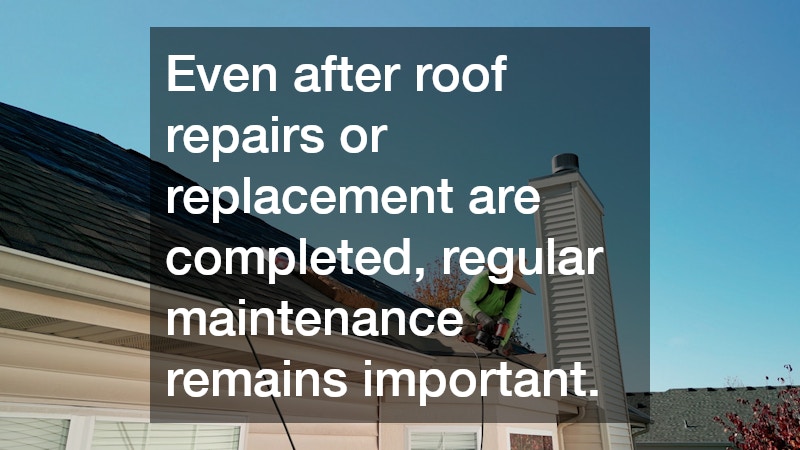
Even after roof repairs or replacement are completed, regular maintenance remains important. Periodic inspections can help identify small issues before they turn into major problems. Cleaning gutters, removing debris, and checking for damaged shingles can help extend the life of the roof.
Homeowners should also schedule professional inspections after severe storms or extreme weather events. Taking these preventative steps helps ensure the roof continues to perform effectively for many years. Consistent maintenance reduces the likelihood of unexpected roof repairs and protects your home’s structural integrity.
Understanding the roof repair and replacement process helps homeowners feel more confident when roofing issues arise. From identifying early warning signs to completing final inspections, each step plays an important role in restoring the roof’s strength and durability. Whether the project involves minor roof repairs or a full replacement, working with experienced professionals ensures the job is completed safely and effectively. By staying proactive with maintenance and inspections, homeowners can protect their property and extend the life of their roofing system.